Translate Work Into Systems
Requirements, data shape, edge cases, workflows, and ownership boundaries come before code generation.
AI-assisted developer turning real business problems into working software.
I use AI coding tools as a force multiplier. The work is still requirements, architecture, system design, debugging, validation, and deciding what should be built in the first place.
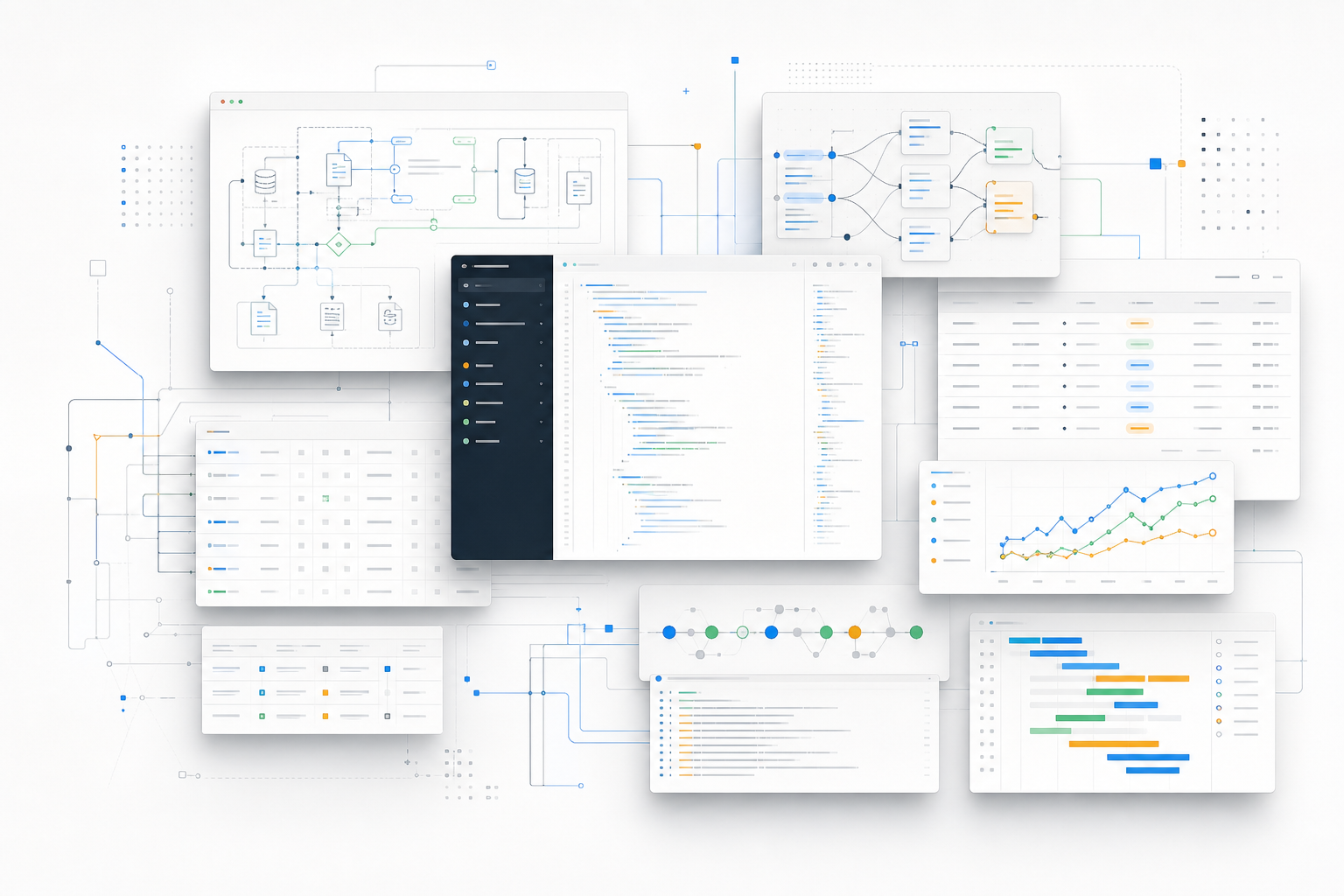
The story is not that I typed every line by hand. The story is that I can take a messy operational need, drive AI tools through the build, catch what is wrong, and keep pushing until the system works.
Requirements, data shape, edge cases, workflows, and ownership boundaries come before code generation.
Claude, Codex, Gemini, and similar tools accelerate syntax and scaffolding, but they still need direction, review, and correction.
The useful output is not a demo screen. It is a workflow that survives data imports, business rules, auth, failure cases, and actual users.
Projects rewritten from the local codebases, not just the outline: what exists, what it is for, and where AI-assisted development mattered.
AI-assisted build of an internal operations hub for a printing/distribution business. Verified modules include commission processing, tax checks, order ingest, UPS invoice parsing, dashboards, alerts, activity logs, and a HubStation assistant.
The real work was turning spreadsheets, SOS/QuickBooks exports, recurring exceptions, and owner knowledge into software rules the business can actually use.
AI-assisted rebuild of the ops model into a broader multi-tenant platform: customers, orders, inventory, invoices, vendors, purchase orders, custom fields, business rules, portal-enabled reorder data, managed programs, and lane analytics.
The codebase shows the system-design layer: templates, seed data, permission tests, analytics rollups, and CDS-specific portal workflows.
Remote Claude Code portal and provider-agnostic AI chat workbench for controlling coding agents away from the desk. The local repos include a Vercel-ready portal concept and an ApexUI server using OpenAI, Anthropic, Gemini, and SQLite.
This is the portfolio's meta-project: better access to the tools used to build the other tools.
ML, Optimization & Analytics Platform exploring natural-language analytics, model selection, visualization, and optimization with Gemini in the loop.
Built as a broad Python/Dash/FastAPI experiment around what AI can do when paired with pandas, Plotly, ML libraries, and solver engines.
Dash-based solver that lets users define variables, objectives, constraints, and solver choices with AI help translating plain English into mathematical form.
This is where assisted development meets assisted analysis: Gemini helps frame the problem, then PuLP, SciPy, and OR-Tools do the solving.
Accounts-receivable collections MVP for QuickBooks SMBs: AR dashboard, invoice aging, risk scoring, due-sequence emails, send logs, open/click tracking, and payment-received sequence pauses.
The thesis is practical automation: replace manual follow-up with rules, risk signals, and auditable customer communication.
Local-first one-person tracker with lanes, statuses, WIP cap, recurring cadence, project promotion, stale marks, and kill-with-reason archiving.
Hierarchical project manager with folders, tasks, subtasks, JWT auth, Neon Postgres, and strict parent/child business rules.
Public field notes on building real software with AI and why the human in the loop is still the job.
Read notesHubStation module direction for print PDF checks: page size, bleed, image DPI, color mode, embedded fonts, and production readiness signals.
I am not presenting these as hand-coded monuments. They are evidence of a newer workflow: AI can write a lot of the code, but it cannot own the requirements, understand the business, decide the architecture, or know when its own answer is wrong.
My value is in staying in that loop: translating operations into system behavior, pushing tools like Claude, Codex, and Gemini through implementation, then reviewing, testing, and correcting the result until it matches the real workflow.